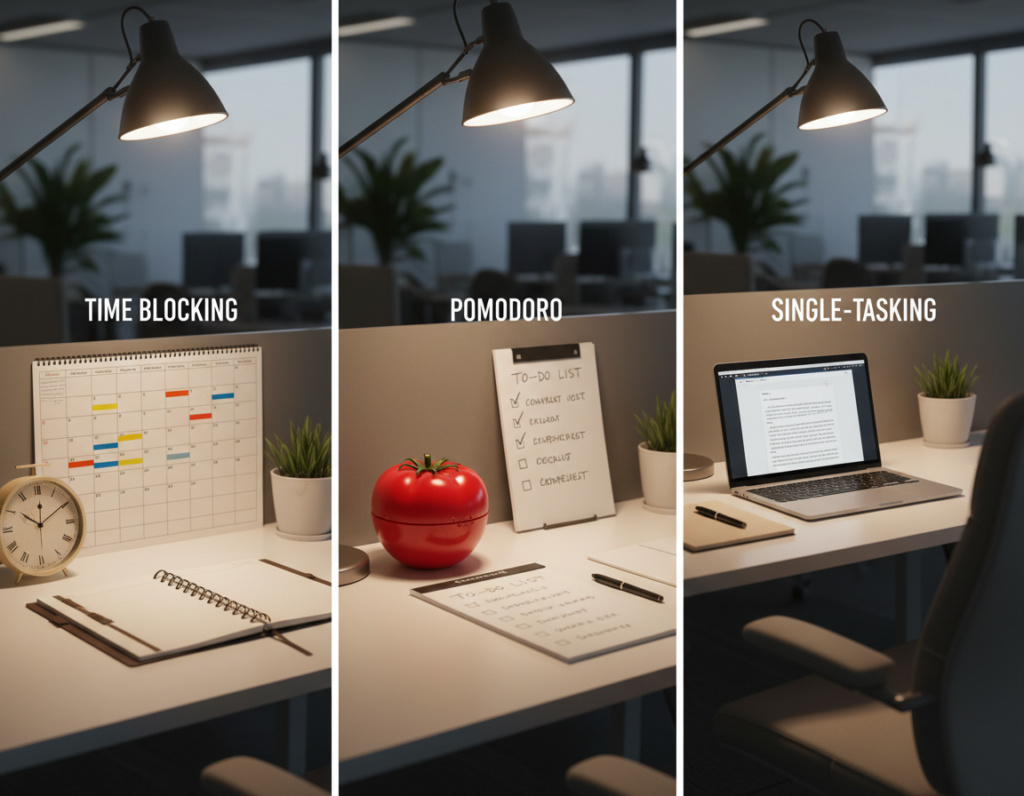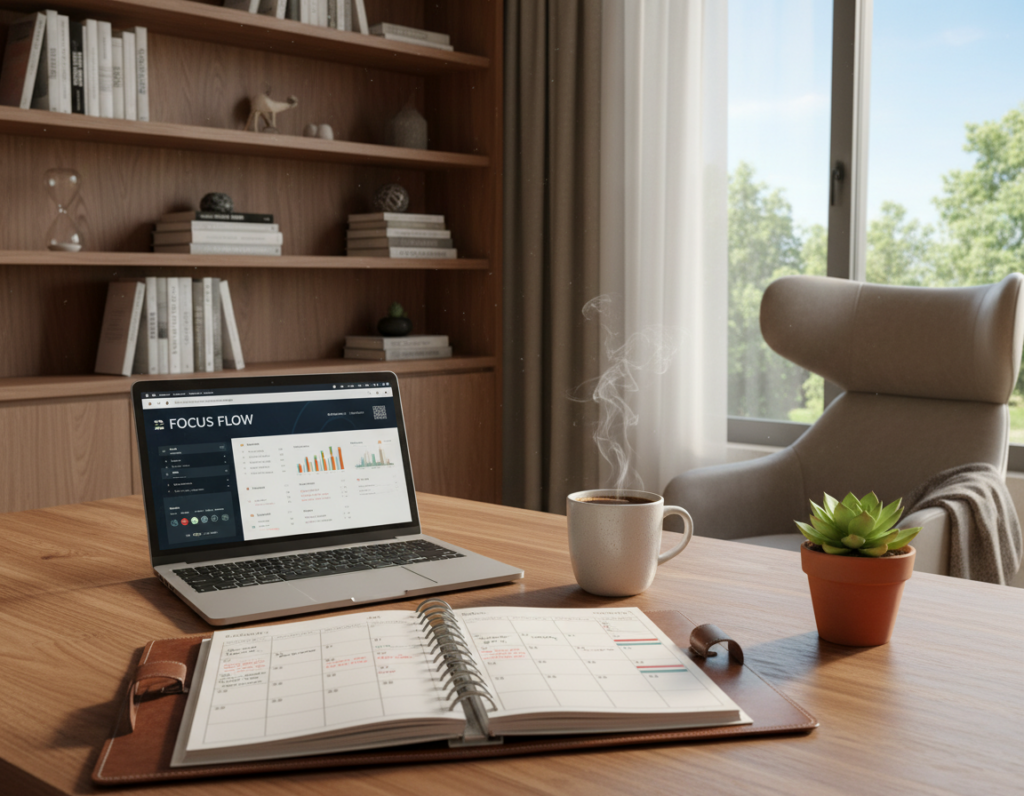
This guide sets a clear goal: spend more time on fewer things and measure success by output, not inbox tricks.
Many makers feel busy while their best work stalls. The problem is doing tasks that do not increase your creative output. Think of makers like Seth Godin, Ryan Holiday, and A.R. Rahman. Their steady art shows that prolific work is a repeatable model, not mystery talent.
Creative productivity is a practical approach that blends focus, systems, and routines so creativity and creativity reinforce each other. This guide offers concrete methods to protect attention, structure your day, and ship work repeatedly.
Expect tactics for attention management, workspace design, idea capture, energy-based scheduling, breaks, input control, anti-perfectionism, collaboration, automation, and tracking progress. The scoreboard is simple: drafts, designs, episodes, or assets produced.
Why Creativity and Productivity Aren’t Opposites
Consistent creation, not frantic bursts, is what builds a lasting body of work. Prolific makers show that steady habits matter more than rare inspiration. Seth Godin writes daily and has 17 best-selling books. Ryan Holiday averages about a book a year. A.R. Rahman’s catalog spans decades.
Prolific creators prove the model
These examples prove a pattern: consistency over years beats occasional intensity. Work isn’t brilliant every time, and that’s normal.
Creative output as the real scorecard
The goal isn’t to get more done in less time…it’s about spending more time on fewer things.
“Your creative output is the measure.”
What this means in practice: schedule + systems + shipping create momentum and cut dependence on mood or muse. Protecting attention and energy lets you make better work, not just more busywork.
- Define your scorecard: word count, drafts shipped, assets produced, or sessions completed.
- Accept average iterations as part of mastery; avoid the trap that every piece must be brilliant.
- The world favors steady contributors—distribution and audience attention reward rhythm.
Quick self-audit to use all week: What did I create today that didn’t exist yesterday?
What Creative Productivity Really Means
Real progress happens when you spend time on fewer projects and measure success by output, not busywork.
Spending more time on a single thing reduces context switching and raises quality. Fewer priorities let you finish work instead of juggling drafts and half-done tasks.
Spending more time on fewer things for higher-quality work
Define this approach in operational terms: limit priorities, protect deep blocks, and follow a repeatable process that produces finished work.
Choosing depth over “getting more done”
Pick one primary project per cycle. Keep secondary commitments only if they support the main project. This reduces rework and decision fatigue.
Defining your creative output targets by project type
Set clear output goals: for example, 1 article draft/week, 3 design concepts/day, 2 video scripts/week, or 5 social captions in a batch. Clarify what “done” means for each item.
“Think like an artist, but work like an accountant.”
- Process: ideate → draft → revise → publish → promote → review.
- Decision rule: fix a finish line to stop endless polishing.
- Benefit: tying tasks to output makes the day clearer and reduces overwhelm.
Manage Your Attention Like a Professional Resource
Attention is the currency of achievement. Protecting it turns hours into work that matters. Deep focus produces art that resonates; scattered attention produces drafts that never land.
Deep work principles that make work stick
Time-block one meaningful task and call a clear finish line for the session. Remove distractions and treat the block as a billable chunk of time.
How task switching costs your brain and energy
Switching between tasks can cut up to 40% of productive time. The brain pays an energy toll each time you change context, so minimize interruptions.
Simple email and notification rules
Check email once a day or at two scheduled windows. Never use the inbox as your to‑do list. Set response expectations so you won’t lose focus on real work.
Default notifications to off. Allow only mission‑critical alerts. Move messaging apps out of sight during focus blocks.
Social media boundaries that prevent comparison spirals
Pick one primary platform and limit passive scrolling. Schedule posting windows and avoid browsing feeds before you start making things.
Comparison is kryptonite for artists; time spent measuring others is time not spent making your own work.
- Treat attention as a finite resource: if you can’t control it, you can’t make work worthy of other people’s attention.
- Deep work rule: single-task, remove distractions, define the finish line.
- Implementation checklist: identify top distractors, pick two boundaries to enforce this week, and track how your output changes.
Design a Sacred Space That Makes Focus Automatic
A well-crafted workspace nudges your mind into focus before you even sit down. Treat that area as a sacred space: a place that signals, “this is where I create.”
Environmental cues that reinforce habits and systems
Use the same desk, tools, and a short pre-work ritual to cue deep work. Repeating these cues trains the brain to start faster and with less friction.
Digital workspace hygiene
Close unused apps, cap open tabs, and use full-screen mode. Pick one background sound strategy: silence, instrumental, or nature. These steps keep your digital space tidy and reduce interruptions.
Biophilic design basics
Maximize daylight, add a real plant, and favor natural materials and calm colors. Studies link nature elements to lower stress and up to a 15% boost in output.
When changing locations helps
Move when momentum stalls. A half-day at a library, a morning café sprint, or a walking brainstorm can refresh attention and spark new ideas.
| Upgrade | Quick action | Benefit |
|---|---|---|
| Physical | Add one plant or improve light | Lower stress, better focus |
| Digital | Close apps, limit tabs | Fewer distractions |
| Routine | One 60‑second pre-work cue | Faster start to deep work |
“A tidy space shortens the path from idea to finished work.”
Build Systems That Capture Ideas and Reduce Rework
Ideas arrive at odd times; systems make sure they move from mind to work.
Your brain is a terrible place to store information. Relying on memory raises the chance of dropped ideas, duplicated work, and wasted time. Capture systems protect momentum and free mental space for making.
Simple capture and daily processing
Pick one trusted tool: a notes app, a dedicated notebook, or voice memos. Use it for every idea, task, or link you collect.
At the end of each day, spend five minutes processing captures. Move items into projects or delete the noise.
Repeatable workflows that stop reinvention
Use a clear flow for writing and publishing: draft → revise/proofread → add links → publish → share/send.
For design and media projects, use an asset checklist: source files, exports, captions, and version control.
Templates and checklists to cut decision fatigue
- Standard brief template (goal, audience, deadline).
- Creative outline for design and word projects.
- File-naming rules and a short review checklist before release.
| Role | Example system | Time saved |
|---|---|---|
| Designer | Asset checklist + naming convention | 30–60 min per project |
| Writer | Draft/revise/publish workflow | 1–2 hours per piece |
| Solo creator | Weekly ship list + distribution steps | Hours reclaimed weekly |
A quick system audit
Identify one workflow you repeat weekly. Document it in 15 minutes. That small effort compounds: fewer repeats, less rework, and more time on actual creation.
“Systems turn good ideas into finished projects.”
Structure Your Day Around Creative Energy Peaks
When you plan around your personal highs and lows, a few focused hours move projects forward.
Identify and protect your best window
Map your energy by tracking three workdays. Note when imaginative thinking is sharpest and when you feel drained.
Reserve that peak for high-value making. Even one protected 60–90 minute block can change the pace of a project.
Morning blocks vs. afternoon admin
Default the morning to writing, design, or ideation. Make the afternoon for email, meetings, and coordination.
This split reduces context switching and keeps the hardest work in the hours you perform best.
Batching and time-blocking rules
Batch similar tasks—editing, client replies, exports—so you reclaim hours and lower decision fatigue.
- Schedule blocks on your calendar.
- Set a single objective for each block and define what “complete” looks like before you start.
- Use Pomodoro sprints to protect uninterrupted focus when needed.
| Block | Purpose | Duration |
|---|---|---|
| Deep block | High-value making | 60–90 minutes |
| Shallow block | Admin and coordination | 45–60 minutes |
| Buffer | Communication & overflow | 30 minutes |
Weekly planning: pick 1–3 priorities, assign blocks, and pre-batch recurring tasks so requests don’t consume the week.
“Consistent blocks produce consistent output—small habits compound into better work.”
Use Breaks to Prevent Burnout and Spark Better Ideas
A well-timed pause can restore your brain and turn a blocked hour into a breakthrough. Breaks are not a reward for hard work; they are a tool that keeps focus and energy steady across long hours.
Pomodoro Technique for sustainable focus
The classic Pomodoro is 25 minutes of work followed by a 5-minute break. For demanding idea work, adapt to 50/10 or two 25/5 cycles before a longer pause.
Use 25/5 for admin tasks and 50/10 for deep sessions. Set a clear next step before pausing so you return quickly.
What research suggests about breaks and attention recovery
A University of Illinois study found that regular pauses help maintain focus and reduce mental fatigue. Attention declines without breaks; short resets support sustained effort and clearer thinking.
Short breaks refresh the mind and lower the risk of cognitive depletion.
- Why breaks help: they reduce burnout and let subconscious processing mature ideas.
- Guardrails: set a timer, keep breaks short, and resume with a defined task.
- Daily cadence: aim for 2–4 deep cycles, a meal break, and a firm stop time when possible.
Break menu (non-screen): short walk, stretch, drink water, get sunlight, or a breathing exercise. These activities restore energy and reset the mind faster than scrolling.
Regular recovery protects long-term output quality. Over weeks, consistent breaks preserve attention and the power of your ideas, so you ship better work more often.
Let Your Mind Wander to Unlock the Default Mode Network
Daydreams and idle moments are not wasted—they’re a working mode your mind uses to solve hard problems. Neuroscience calls this the default mode network (DMN). When you are not forcing attention, the brain connects distant information and surfaces novel solutions.
Why walks, showers, and commutes produce breakthroughs
Famous examples—Archimedes in a bath, Einstein walking, J.K. Rowling on a delayed train—show how a single idea can appear off the desk. Low-demand settings let subconscious processes recombine knowledge.
Plan short unstructured thinking windows
Schedule 10–30 minutes of device-free drifting each day. Treat this as work: mark it on the calendar so it helps rather than derails the day.
- Pair with low-effort activities: walking, light chores, or a coffee break.
- Try one longer thinking walk each week to untangle strategy and reset direction.
Capture insights before they vanish
Use a simple capture protocol: voice memo, pocket notebook, or a single notes inbox reviewed daily. Convert each capture into a next action the same day—outline, thumbnail, or a hook line—so an idea becomes output.
This is a professional practice, not laziness. Planned mental space is a small investment of time with high problem-solving power for your work and life.
Create More Than You Consume
What you feed your mind shapes what you can put into the world. Inputs set your taste, your ideas, and the scope of what you believe is possible.
“Garbage in, garbage out” for media inputs
Garbage in, garbage out is literal for creative work: low-value feeds produce thin content and short-lived ideas. Social platforms often feel like donuts for breakfast—nice fast sugar, then regret.
How information overload kills focus
Too much media crowds out making time and raises anxiety. When feeds run your attention, you lose headspace for slow thought and original work.
Practical limits you can adopt now
- Skip the news for two weeks to reset context.
- Check email once a day and close notifications.
- Pick one social media platform and stop passive scrolling on others.
Build a richer ecosystem
Cultivate diverse influences—books, films, essays, craft resources—to avoid echo chambers. As Robert Greene notes, a varied ecosystem yields stronger ideas.
| Rule | Action | Benefit |
|---|---|---|
| Create-before-consume | Make one draft first each day | Protects best hours for making |
| Weekly media plan | Batch 3 intentional sources, capture two takeaways | Turns input into prompts for work |
| Curate quality | Favor books and craft pieces over algorithm feeds | Improves taste and long-term output |
For more guidance on balancing intake and output, see Create, Connect, and Consume. The less low-value consumption you do, the more space you have to produce meaningful output consistently.
Build Habits That Make Creativity a Non-Negotiable
Habits make making reliable; they turn good intentions into actual work. Prolific people act before inspiration arrives. Action creates momentum, and momentum calls new ideas.
Show up instead of waiting for a feeling
Teach consistency as the foundation. Showing up each day reduces dependence on mood and makes output predictable.
Start the day with short, focused rituals
Begin each morning with 10–30 minutes of making: freewriting, sketching, or outlining before email. This reserves your best time for the hardest work.
Refill your tank with playful solo time
Use weekly Artist Dates—Julia Cameron’s method—to restore your reserve of ideas. Try a museum visit, a photography walk, or bookstore browsing with a prompt list.
Action leads to inspiration: a brief daily habit generates small wins that compound. When life gets busy, these routines still produce progress.
“Routine is the scaffold that holds long creative lives.”
- Make sessions calendar-bound and non-negotiable.
- Track streaks or join coworking to stay accountable.
- Keep rituals short so they survive busy weeks.
Increase Output Without Perfectionism
Perfectionism acts like glue that slows work and buries good ideas before they see daylight. It raises the cost of starting, stretches tasks, and often prevents shipping.
Volume over quality: getting to better work faster
Making more drafts trains your eye and improves quality over time. Repetition builds skill, so aim to produce often rather than polish every piece.
The power of the “shitty first draft” mindset
Anne Lamott gave us permission to be crude at first. Ed Catmull from Pixar reminds us that early versions will suck—then they improve. Label early files v0 and move on.
Stay brave by being an amateur
When you accept amateur status, you free yourself to experiment and risk. That risk yields new ideas and better art over many tries.
Constraints that ignite ideas
Limits force invention. Try a 60-minute time cap, use only one tool, or write with a 50-word rule like Dr. Seuss did. Constraints cut options and spark solutions.
Offline creation before digital refinement
Sketch, handwrite, or collage first. Austin Kleon separates analog and digital desks for a reason: hands-on making boosts idea flow and saves digital clean-up later.
“Ship more. Learn faster. The market gives feedback you can’t fake.”
- Anti-perfectionism protocol: draft fast → label v0 → three timed edits → set a ship deadline.
- Outcome: more shipped work yields faster learning, real feedback, and higher long-term quality.
Make Teamwork and Feedback Loops Work for You
Teams multiply output when roles are clear and feedback is focused. Clear expectations let people do their best work and save time. Without structure, review cycles stretch and resources get wasted.
Clear briefs that stop revision spirals
Use a short brief checklist so reviewers align fast and edits stay on scope.
- Goal
- Audience
- Message
- Constraints
- Brand / design guidelines
- Formats
- Timeline & approval process
Intentional briefs protect time and resources by preventing avoidable revisions and stakeholder misalignment. That saves review cycles and speeds projects to launch.
Collaboration as a creativity multiplier
Diverse people bring different references and problem solving. Pair writers with designers, marketers with product, or senior with junior to widen thinking.
Practical cross-pollination turns separate skills into better work and higher creative output.
Feedback loops after shipping
After release, review performance, collect stakeholder notes, and record process improvements. Make one person the final approver so decisions are fast.
Ship, review, learn, and feed those lessons into the next cycle.
| Stage | Action | Benefit |
|---|---|---|
| Brief | Use checklist | Fewer edits |
| Collab | Cross-discipline pairs | Richer ideas |
| Review | Post-mortem notes | Better next output |
Automate the Busywork and Use AI as a Creative Partner
Automating routine chores turns small daily drains into reclaimed hours for real work. Treat automation as protection: remove low-value admin so your best hours go to making, not managing.
Practical tasks to automate first
Start with easy wins: scheduling, basic inbox triage, reporting, and social media scheduling/monitoring. These tasks consume time and dilute focus.
AI to scale concept generation
Use AI to generate multiple ideas, rapid outlines, or visual variations. It speeds starts and produces options, while humans make the final decisions.
Guardrails to protect quality and brand
Set rules: brand guidelines, prompt libraries, and a short review checklist. Keep a mandatory final human approval step so design and voice stay consistent.
- Document what you automate and what stays manual.
- Use a “human-in-the-loop” process for drafts and revisions.
- Run a one-workflow pilot this month, measure time saved, and reinvest that time into a named project.
Automation frees resources and power for higher-value work, not to reduce judgment.
Measure Progress, Not Vanity Metrics
Progress is best measured by the work you do, not the applause you get. Start by separating surface signals from real output.
Mastery over metrics: avoiding “insecurity work”
Vanity metrics—likes, refresh-hits, and shallow engagement—feel productive but often waste time. Scott Belsky calls this insecurity work: checking numbers instead of making things.
Swap that habit for a process you control. Track inputs that predict progress: daily word count, drafts shipped, episodes produced, or design assets completed.
Process-based tracking that guides decisions
Measure what you can control and review outcomes you influence. Use engagement and conversion data to learn, not to tinker constantly.
Measure small wins. Use data to guide the next piece of work, then go make it.
Weekly review and a simple dashboard
- Weekly questions: what shipped, what moved, what blocked you, and one change to try next week.
- Dashboard idea: 3–5 process metrics + 1–2 outcome metrics, reviewed weekly to protect focus.
| Metric type | Example | Why it matters |
|---|---|---|
| Input | Daily word count / sessions completed | Shows effort and practice |
| Throughput | Drafts shipped / assets exported | Measures finished work |
| Outcome | Engagement rate / conversions | Signals what resonates |
Fact: consistent practice beats chasing spikes. Use metrics to learn, protect your best hours, and keep making the next thing.
Conclusion
A steady practice of focused work, small recoveries, and honest measurement builds lasting careers.
Manage attention, shape a workspace that supports focus, build simple systems, and schedule your best hours. This approach makes making part of daily life, not an occasional sprint.
Measure real output—drafts shipped, sessions completed, and assets released—not vanity signals. Use that scorecard to guide choices and protect your time.
Pick one change this week in attention, space, systems, schedule, breaks, inputs, and shipping. Start with one deep block per day, one capture tool, one weekly review, and one firm ship date.
Acknowledge limits and aim for sustainable balance. Commit the next session on your calendar and protect it like a client meeting. Learn more on balancing creativity and productivity as you build this long-term practice.