Anúncios
The modern workplace is undergoing a massive shift. What started as a quick fix has evolved into a permanent way that teams function today. Organizations no longer rely on a central office to get things done effectively.
This new era of hybrid work demands a total rethink of our daily routines. Traditional methods often fail when team members operate across various time zones and digital spaces. Simply trying to force old habits into a hybrid environment creates unnecessary friction and delays.
Successful collaboration now requires intentional planning rather than luck. Leaders must build frameworks that support both individual focus and collective work goals. This guide outlines eight vital steps to help your teams thrive during this transition.
By embracing cultural changes and better tech, you can master professional collaboration in a distributed world. Ongoing adaptation remains the secret to maintaining high performance in any modern office. Optimizing how people interact from different locations is no longer optional for growth.
Understanding the Hybrid Work Collaboration Challenge
Navigating the complexities of a split workforce requires a deep look at why old methods are failing today. While many companies assume people can just adapt, the reality is far more complex. True collaboration in this new era requires intentional design and better tools to bridge the gap.
Anúncios
Shifting away from a traditional office model changes how people interact and share knowledge. Without a physical hub, the natural rhythm of a team often breaks down. Leaders must now address these frictions to keep their organizations moving forward effectively.
Why Traditional Collaboration Methods No Longer Work
Old ways of working relied on spontaneous hallway chats and quick desk visits. These methods assume everyone is in the same room at the same time. In a hybrid work model, these “water cooler” moments disappear for those at home.
Distributed workers can no longer rely on physical cues to start a conversation. Relying on “in-person only” habits leaves out anyone who is not in the building. This creates a gap where people feel isolated from the main flow of information.
Anúncios
The Current State of Hybrid Team Productivity
Recent research from Gallup shows significant room for growth in modern office plans. In a study of 2,877 workers, they found that teamwork is now harder to coordinate. Productivity suffers when partnerships are difficult to cultivate across different schedules.
Without a clear plan, teams struggle to stay aligned on daily goals. When people are physically distanced, it takes more effort to maintain a strong work connection. Many organizations are still searching for the right balance between flexibility and output.
Ongoing Challenges Teams Face in Hybrid Environments
Many employees face inequitable meetings where they cannot see or hear colleagues well. Inefficient setups make it hard for those in remote work to participate fully. This environment often leads to wasted time and lower productivity for everyone involved.
Global teams also deal with time zone friction and confusing technology systems. Common challenges include the following points identified in a Lucid survey:
- Only 43% of firms have implemented digital collaboration tools.
- Just 39% of meeting rooms are properly equipped for hybrid teams.
- Only 37% of employees received training for hybrid facilitation.
- A mere 34% of companies created clear meeting guidelines.
These gaps leave many feeling out of the loop and slow down project timelines. When a team lacks standard systems, they spend more time troubleshooting than doing actual work. Intentional intervention is necessary to move beyond these common hurdles.
Step 1: Create a Formal Hybrid Collaboration Plan
Establishing a foundation for teamwork starts with moving past vague assumptions toward a documented plan. Research shows that 48% of workers are on a team that has never discussed a formal arrangement for their split-location environment.
While companies often set broad office days, these rules do not address how tasks actually get finished. Without a clear strategy, many groups struggle to stay aligned and productive throughout the week.
Why Your Team Needs a Hybrid Work Charter
A charter serves as a roadmap that goes beyond a standard organization policy. While a general policy tells you when to be present, this document explains how to perform the work effectively as a unit.
Having a plan for hybrid collaboration results in employees being 2.2 times as likely to say their organization’s hybrid policy has an extremely positive impact on their team’s collaboration.
Clear guidelines improve overall performance and make members 66% more likely to be engaged at their jobs. This structure also helps reduce burnout by nearly 29%. Using a hybrid model requires explicit rules to keep everyone synchronized across different time zones and spaces.
Essential Elements to Include in Your Plan
Your document should outline clear expectations for both remote and office-based tasks. Following industry best practices helps prevent common communication gaps that frustrate distant workers.
Every hybrid team should define its core goals and the individual strengths of all members. A high-quality plan typically includes the following items:
- The shared mission and primary objectives.
- Preferred communication channels for different tasks.
- Specific schedules for synchronous meetings.
- Protocols for document sharing and updates.
How to Build Team Agreement and Buy-In
Building a lasting plan requires active participation from the entire team. Currently, 51% of individual contributors lack a roadmap, which is a significantly higher rate than for their leaders or managers.
Leaders must invite everyone to contribute to the charter to ensure meaningful buy-in across the board. When you co-create the rules, you balance hybrid flexibility with the need for group work.
This inclusive approach ensures that every person feels ownership over their shared success and understands their role in the collaboration process.
Step 2: Establish Clear Guidelines for Hybrid Work Collaboration
Clear operating procedures are the backbone of any effective flexible group. Without them, hybrid work often feels chaotic and disorganized for everyone involved.
Establishing these standards helps reduce ambiguity and prevents common misunderstandings. It ensures that all team members feel included, regardless of their physical location.
Setting Availability and Communication Expectations
Defining when people are reachable is crucial for smooth daily operations. Research shows that 67% of successful groups use regularly scheduled check-in meetings as a primary collaboration tool.
Additionally, 62% of high-performing teams use guidelines for availability during working hours. Setting these expectations early prevents the frustration of delayed responses and helps people plan their time better.
About 50% of these teams also set clear rules for communication during periods of unavailability. This transparency allows the team to coordinate tasks effectively without guessing who is online.
“The most effective teams don’t leave interaction to chance; they design it to be inclusive and predictable.”
Defining On-Site vs. Remote Work Priorities
Many groups focus solely on how many days to spend in the office. However, only 29% of groups provide guidelines for prioritizing specific activities while they are on-site.
This is a missed opportunity for better collaboration and deeper connection. High-value activities like feedback sessions and bonding should be saved for face-to-face moments.
Focusing on these specific tasks while physically together increases engagement more than any other practice. It makes the work feel more meaningful and productive for the whole team.
Creating Team-Level Working Agreements
A working agreement is a living document that the entire group helps create together. It should specify core hours across different time zones to ensure fairness for everyone.
These agreements must outline expectations for where to share updates and how quickly to respond. Storing this document in a central location ensures that everyone can access it easily at any work site.
Regularly revisiting these rules allows the group to adapt as their needs change. Clear rules create a sense of equity and ensure that the work remains focused on shared goals.
Step 3: Equip Your Hybrid Office with the Right Technology
The right combination of hardware and software acts as the glue for teams split between different locations. Without a strong digital foundation, your team will struggle to communicate effectively. It is vital to prioritize technology that makes participation equal for everyone, regardless of where they sit.
Essential Hardware for Hybrid Meeting Rooms
For a truly effective hybrid office, every meeting space needs high-quality cameras and speakers. Many teams now use interactive touchscreens to keep everyone engaged during discussions. Remote attendees must see and hear in-person participants clearly to feel like a part of the team.
The Board 65 by Avocor is designed with hybrid collaboration in mind. It provides an interactive touchscreen that engages in-person colleagues with optimized audio and video. This specific hardware ensures remote participants are an equal part of the conversation.
Video Conferencing and Meeting Software Standards
Organizations should standardize their video conferencing and meeting software across the entire company. Whether you choose Google Meet, Zoom, or Webex, consistency is the key to efficiency. This eliminates time spent installing or learning new tools for every different meeting room.
Using a single platform helps employees feel more confident when starting meetings. It reduces technical delays and allows the team to focus on the actual work. A unified approach prevents the frustration of searching for links or fixing audio setup issues.
Visual Collaboration and Digital Workspace Tools
Use visual collaboration solutions like virtual whiteboards to give your hybrid workplace a common working space. These tools allow teams to collaborate during meetings and asynchronously throughout the week. Digital diagramming helps map out complex ideas that words alone might fail to explain.
When everyone can see the same digital canvas, creative energy flows much better. It bridges the gap between the physical whiteboard in the office and the remote worker’s laptop. This keeps the project moving even when the team is not online at the same time.
Ensuring Technology Integration Across Platforms
The most important consideration is how well your technology works together. Your devices and apps must feature deep integration to ensure a seamless experience for all employees. When systems do not talk to each other, people waste time troubleshooting instead of collaborating.
Conduct a technology audit to identify redundant tools or gaps in your current capabilities. This helps you find platforms that offer the best value and performance. Proper enablement creates a frustration-free environment where the focus remains on the content of the work.
Step 4: Redesign Your Physical Office Space for Collaboration
Transforming your physical environment is the next vital step in making hybrid work actually function for everyone. Historically, leaders based design decisions on headcount and the number of desks needed for a full staff. Today, the office should serve as a specialized tool that enables high-quality collaboration among dispersed groups.
Moving Beyond Traditional Conference Room Design
Modern employees have very clear needs when they commute to a corporate environment. Recent research highlights that workers have specific priorities to make their trip to the workplace feel worthwhile. These include:
- Hybrid collaboration spaces (requested by 64% of staff).
- Single-person enclaves for virtual meetings (requested by 62% of staff).
- Increased privacy for focused tasks (requested by 61% of staff).
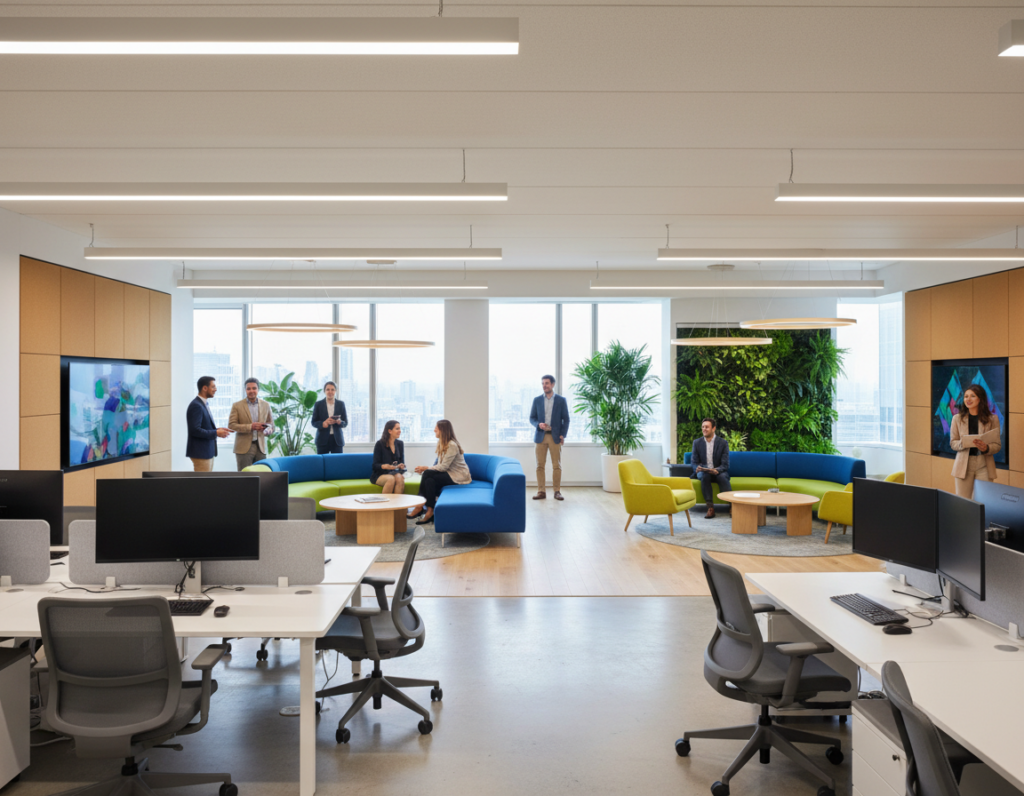
These statistics prove that the old-school board room is no longer the only solution. We must build quiet call rooms for those on video chats and physical pods for deep focus. This variety ensures that the team remains productive regardless of how many people are in the building at once.
Creating Spaces for Different Collaboration Needs
A successful work hub must support a wide range of daily activities. For example, lounging areas allow for organic brainstorming sessions that feel less formal than a scheduled meeting. Hot desks enable a project team to sit together temporarily to solve urgent problems or share quick updates. Large office floor plans can be divided into zones that cater to specific group goals.
The modern office should be viewed as a tool to enable connection, not just a place where people sit to perform individual tasks.
Every space should be equipped with the right technology to bridge the gap between locations. You might mount interactive touchscreens on the wall for permanent brainstorm zones. In areas requiring more flexibility, keeping mobile equipment on rolling stands allows for quick adjustments.
Balancing Individual Focus Areas with Team Spaces
It is critical to balance high-energy social zones with quiet areas for individual tasks. A dedicated team often needs a private space to discuss sensitive project details without distracting others. Organizations must prioritize employees who need a mix of interactive and solitary environments throughout the day.
The workplace is no longer just a row of identical desks; it is a destination for specific activities. This intentional design ensures that people can switch between social and solo modes easily. By creating a flexible office, you provide the versatility needed for a thriving hybrid culture.
Step 5: Implement Hybrid Meeting Best Practices
To ensure no one feels left out, organizations must adopt specific standards for their hybrid sessions. Achieving a seamless flow between digital and physical attendees is not accidental. It requires a deep commitment to intentionality in every interaction.
Making Meetings Equitable for Remote and In-Office Participants
Hybrid meetings often fail remote attendees when they cannot clearly see or hear the room. To make hybrid environments truly successful, you must prioritize an equitable experience for all participants. This approach prevents remote staff from feeling like secondary observers.
Intentional practices help bridge the gap between different working locations. When everyone feels equally valued, engagement levels naturally increase. Proactive inclusivity ensures that every voice carries the same weight, regardless of their physical location.
Standards Every Hybrid Meeting Should Follow
Establishing clear standards helps reduce technical and social friction during every call. If even one person joins remotely, all employees in the physical room should use their individual laptop cameras. This ensures that remote team members can see facial expressions and non-verbal cues clearly.
Keep the conference room microphone active at all times to avoid excluding anyone. This prevents “whisper culture” where in-office employees have side conversations that others cannot hear. Additionally, always include a detailed agenda in the meeting invite so everyone can prepare ahead of time.
Facilitating Effective Hybrid Discussions
Skillful facilitation is the primary key to hosting meaningful discussions. Designate an in-person advocate to act as a dedicated voice for those joining from home. This person ensures that remote attendees have a chance to speak before the group moves to a new topic.
Use interactive digital tools and virtual breakout rooms to encourage collaboration across the team. Managers should also implement a consistent feedback loop to refine their best practices over time. This might involve adjusting camera angles or trying new interactive features on your communication platform.
Post physical copies of these guidelines in every conference room to keep them top of mind. Regular check-ins allow teams to share what works and what needs improvement. By constantly adapting, you create a culture where every meetings session feels inclusive and productive.
Step 6: Adopt Digital-First Collaboration Strategies
Digital-first collaboration serves as the backbone for teams that operate across different locations and schedules. This strategy ensures that information remains accessible to everyone, regardless of where they sit. By prioritizing digital platforms, you create a transparent environment that fosters trust and efficiency within your workforce.
What Digital-First Collaboration Means for Hybrid Teams
A digital-first approach is a specific plan that uses digital platforms to plan and communicate. It does not stop live talks but adds digital records that serve as a map for the business. Even when people work in the office, they should still use these online systems to track their progress.
When hybrid teams work this way, they create a permanent history of their decisions and ideas. This method ensures that no one misses out on vital details just because they were not in the room. It builds a culture where the source of truth is always available to every team member.
Balancing Synchronous and Asynchronous Work
Great collaboration requires a balance between live meetings and independent tasks. Synchronous work happens in real time, such as video calls or in-person chats. While these are useful, too many can lead to meeting fatigue for many teams.
Shifting status updates to an asynchronous format helps manage your time better. You can use video clips or visual tools to explain a concept without a live meeting. This approach allows each person to review the info when it suits their schedule best.
Using synchronous moments for deep problem-solving makes meetings more valuable. Meanwhile, tasks like giving feedback or reviewing data work much better in a flexible, non-live format. This balance keeps the work flowing without cluttering everyone’s calendar.
Creating Documentation That Keeps Everyone Aligned
Solid documentation stops people from losing key info that was only spoken out loud. Teams should use shared docs or digital boards during syncs to record every action item. This habit ensures that every team member can contribute their thoughts to the project.
A digital record makes it easy to update members who could not attend a session. It helps keep the whole work group aligned as the project evolves over several weeks. Effective hybrid teams rely on these digital habits to stay productive and inclusive at all times.
By using these tools, you create a searchable archive of your team’s journey. Future employees can look back at these records to understand why the team made certain choices. This transparency is the key to long-term success in a modern workspace.
Step 7: Schedule Regular Reflection and Adaptation Sessions
High-performing teams don’t just set rules; they actively review their dynamics to stay ahead of challenges. Research shows that a hybrid team engaging in ongoing discussions throughout the year sees 84% better collaboration. This routine reflection ensures that your strategy remains relevant as project needs change.
Relying on a static plan can lead to stagnant productivity. By prioritizing adaptation, you allow your team to pivot when tools or schedules stop serving the collective goal. These sessions transform a rigid policy into a living framework that supports everyone.
How Often to Review Your Hybrid Work Approach
Finding the right time for these reviews is essential for maintaining momentum. Among workers whose team has a plan for hybrid collaboration, 22% have weekly or monthly talks. Another 36% hold periodic discussions quarterly or a few times per year.
Unfortunately, 42% of employees only look at their collaboration methods once a year or never. For those still establishing their rhythms, we recommend a review at least every quarter. This frequency helps catch small friction points before they become major roadblocks to success.
Gathering and Implementing Team Feedback
Collecting honest feedback is vital for long-term success. Routine problem-solving and open communication lead to 50% higher employee engagement. Teams should create safe spaces, such as structured retrospectives, to find opportunities for growth.
The most successful flexible teams are those that treat their operating model as an experiment to be refined through shared experience.
Success requires actually implementing changes based on the feedback you receive. When employees see their voices drive meaningful change, they feel more invested in the process. This practice moves the focus from individual preferences toward shared effectiveness and goals.
Continuously Improving Your Collaboration Practices
For a hybrid team without an established plan, improvement talks are extremely rare. Data indicates that 75% of these groups discuss their teamwork once a year or less. This lack of planning prevents the hybrid worker from seeing how personal flexibility affects the whole team.
By making these sessions a standard part of your workflow, you break the cycle of misalignment. Regular standing in-person meetings can also build rapport while providing a natural space for these talks. Consistent effort ensures that your collaborative habits evolve as fast as the modern workplace does.
Step 8: Invest in Hybrid Work Training and Development

Even the best collaboration plans will fail if your team lacks the specific skills to execute them in a distributed setting. Currently, a staggering 80% of employees have not received any formal training on how to best work in a hybrid work environment. Without structured development, staff are forced to navigate complex new workflows through frustrating trial and error.
Plans for elevating teamwork are most effective when an organization teaches people how to work differently. Workers need to learn how to make the most of flexible schedules while adapting to communication challenges. Investing in education ensures that your workforce remains aligned and productive regardless of their physical location.
Why Training Is Critical for Hybrid Success
Only 21% of workers report receiving guidance from their organization on navigating this new landscape. This lack of preparation leads to well-intentioned staff inadvertently creating inequitable experiences for remote colleagues. Proper training prevents inefficient meetings and reduces the friction that often undermines team performance.
When an employee understands the “why” behind new protocols, they adopt them more quickly. Standardized practices keep everyone on the same page and help maintain a cohesive culture. Without this foundation, the gap between office and remote staff will only continue to widen.
Key Skills Hybrid Teams Need to Develop
Hybrid teams must master specific competencies like facilitating equitable meetings where every voice is heard. They also need to focus on making strategic group decisions with distributed input and creating searchable documentation. These skills ensure that information flows freely to every employee, no matter when they log in.
Organizations should encourage a “try it out” mentality regarding new software features. Employees need time to experiment with conferencing tools and digital workspaces to see what fits their workflow. Sharing feedback after testing new practices helps the entire group improve their collective habits.
Training Managers to Lead Hybrid Teams Effectively
Success in a flexible model depends heavily on leading from the middle. Research indicates that having an effective manager leads to four times higher engagement and wellbeing. Unfortunately, only 28% of managers have been trained by their companies to lead hybrid teams effectively.
Upskilling must start with supporting these managers as they set the tone for daily collaboration. They need to learn how to foster inclusion and track outcomes without relying on physical oversight. When managers feel confident, they can better support their direct reports through the transition.
Investing in your managers is an investment in the long-term health of the company. These leaders serve as the bridge between high-level strategy and daily execution. Their ability to adapt to new tools and social dynamics will determine the ultimate success of your flexible workspace.
Conclusion
Building high-performing hybrid teams is an intentional process that demands strong leadership and clear guidelines. These groups do not find success by accident. They rely on structured frameworks that prioritize collaboration over simple presence.
The best hybrid groups share common habits. They create a unique team charter that goes beyond standard corporate policy. Effective members communicate their availability clearly and use in-person time for high-value activities.
None of this happens organically, especially as roles change and cross-functional work adds complexity. Leaders must invest in training and effective digital workplace strategies to maintain productivity levels. It is essential for managers to receive specific guidance on leading distributed groups.
Ultimately, the future of the workplace depends on how well leaders support their teams. By focusing on a healthy culture and consistent collaboration, every team can thrive. The work of tomorrow starts with the deliberate steps taken today.