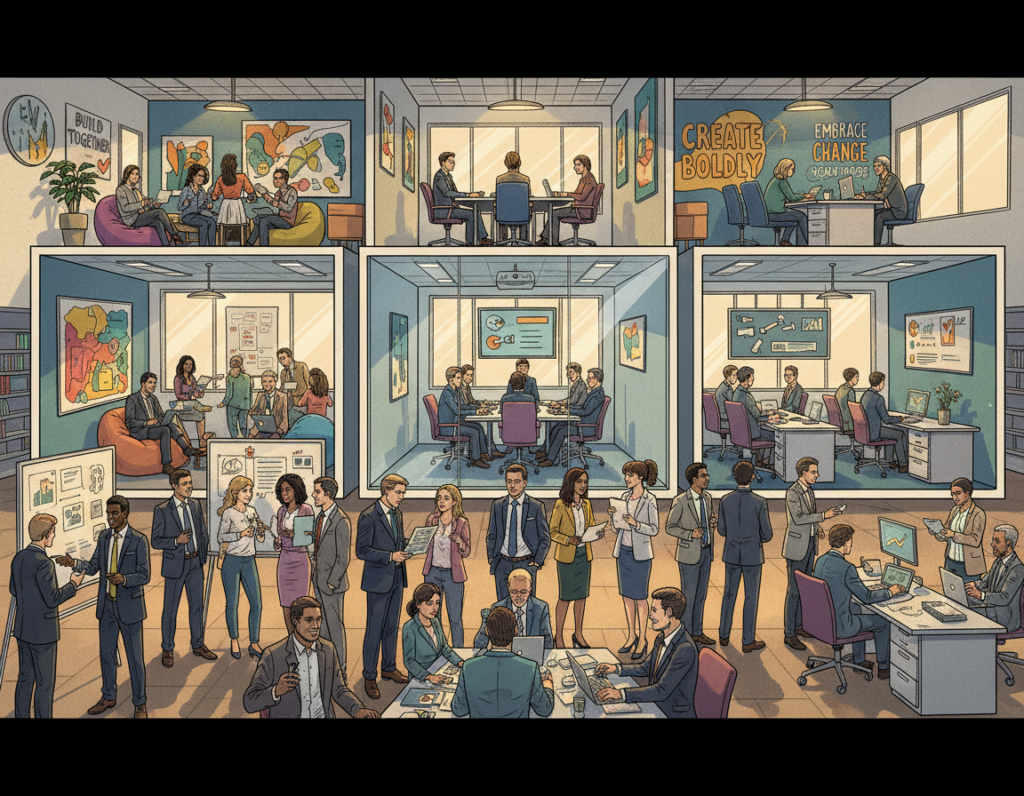
Work is no longer a single job title. It is a set of projects, skills, and outcomes you can point to. This change asks people to think in terms of value they create, not the company name on a business card.
What is a practical future work mindset? It is a simple way of thinking that helps you stay adaptable, valuable, and fulfilled as roles shift in real time. You learn by doing, by designing small projects, and by choosing environments that support growth.
This guide will give repeatable steps to build that approach without waiting for the perfect role or timing. You will learn to respond to three big shifts: changing arrangements, accelerating complexity, and a weaker link between formal education and day-to-day tasks.
Who this is for: professionals, managers, and individual contributors who want control amid uncertainty. By the end you will have a clear system for learning, experimenting, and collaborating so your career stays resilient across life stages.
Why Work Feels Different Today and What’s Driving the Change
The rules that once defined steady employment no longer fit most people’s daily reality. Rapid shifts in how jobs are arranged, how complex tasks have become, and how education maps to roles explain why many feel unsettled.
The rise of alternative arrangements and portfolio careers
From 2005–2015 employment growth concentrated in on-call, contract, and freelance roles rather than new full-time posts. Many people now combine projects, part-time roles, and advisory gigs into a single career portfolio.
Practical result: stability depends less on one employer and more on transferable skills and a proven track record across different things.
Complexity is growing faster than productivity
BCG research shows “complicatedness” rising about 6.7% per year for decades. Jobs now involve more stakeholders, more tools, and faster cycles, often without extra time or clarity.
This gap raises the risk of overload for high performers and increases burnout and frustration.
Education, knowledge, and career mapping
Fewer than three in ten people work in fields tied to their college major. Industries and roles change quickly, so specific knowledge can go stale even if fundamentals still matter.
- Impact on career planning: linear ladders fade; continuous learning becomes essential.
- Impact on organizations: hiring and promotion models must adapt to keep capabilities current.
- Net takeaway: update your mindset and build systems that match this changed reality.
How to Adopt a Future Work Mindset Without Waiting for the “Perfect” Job
A practical shift in how you measure success can make careers more durable amid change. Start by moving from titles to repeatable value you deliver.
Reframe the question
- Stop asking, “What title should I get?”
- Ask, “What value can I reliably create, and for whom?”
- Design small projects that prove that value.
Write a short value statement
Format: outcome + stakeholders + metric. Example: “Improve onboarding speed for new hires by 30% in three months.”
Build self-certainty
“Self-certainty is clarity about who you want to be, the values that define you, and how you consistently show up.”
Make a brief to-be list (calm, direct, curious, accountable). Use it when choices feel unclear.
Grounded optimism means facing constraints, then testing small bets. That combination reduces risk and accelerates growth.
- What energizes you?
- What drains you?
- What gives a sense of success beyond rank?
Once you align values and value creation, the next step is a learning system that turns intent into skill and measurable progress.
Build a Lifelong Learning System for Continuous Learning and Skill Growth
Treat learning as a repeatable loop that powers steady skill growth. A system beats slogans: set clear goals, pick learning inputs, practice on real tasks, then review results.
Choose curiosity over cleverness
Adopt a learn-it-all stance: prioritize questions and fast feedback. Leaders who model humility and curiosity create safer teams and speed up progress.
Set skill goals to match the pace of change
Pick 1–2 durable human skills (communication, problem-solving) and 1–2 technical skills tied to your industry for the next 6–12 months. Align goals to measurable outcomes.
Use mixed learning and track progress
Combine a community-college certificate or extension course, an online class, and a workplace project that forces application.
- Monthly skills log
- Portfolio of shipped outcomes
- Quarterly reflection prompts
Close skill gaps by blending data literacy with stakeholder management, or AI-tool fluency with ethical judgment and clear writing. Continuous learning cuts time to qualify for new roles and raises confidence during change.
“Individuals with high learning agility get promoted faster.”
Design Your Work Around Projects, Experiments, and Opportunities
Shift from role-based thinking to a portfolio approach. Define outcomes you own, the constraints you face, and the stakeholders who care. That clarity helps you build a track record that travels with you.
Think in projects
Create a simple portfolio inside one employer: list 3–5 projects, the skills shown, the team context, and measurable outcomes. Use that list in reviews, resumes, and networking conversations.
Run small experiments
Try low-cost tests: a pilot process change, a cross-functional short assignment, or publishing a short analysis. Each experiment yields quick learning without risking your whole career.
“Small bets produce big insights: what you enjoy, what you do well, and what the market rewards.”
Create autonomy
Negotiate scope, propose a new deliverable, or pick methods that improve output. Initiative plus alignment beats waiting for formal permission, since permission is often an illusion.
- Micro-opportunities: process fixes, feedback loops, training sessions.
- Document outcomes: metrics, team roles, and lessons learned.
- Use experiments to guide next steps and to surface leadership needs in teams.
Project-based thinking makes collaboration easier and accelerates growth. For practical methods on structured experimentation, see this guide on experimentation.
Lead and Collaborate Through Change by Setting the Tone
Leaders set the emotional climate that shapes how teams respond to uncertainty. A steady tone reduces noise, speeds decisions, and keeps focus on outcomes.
Be the thermostat, not the thermometer: managing emotional contagion at work
Thermostat vs. thermometer means you control the baseline mood instead of just reflecting it. Don’t amplify panic. Instead, name the reality and set a calm, purposeful baseline that helps people act.
Practical behaviors: name the facts, share a clear why, restate priorities, and model calm urgency. These actions reduce conflict and help teams make faster decisions.
Create learner safety so employees and teams can innovate faster
Invite dissent and reward questions. When leaders share missteps, they remove the stigma around failure. That makes it safe to test ideas and iterate quickly.
- Start meetings with: “What did we learn?”
- Follow with: “What will we try next?”
- Track small experiments as normal deliverables.
Learner safety shortens time-to-solution and raises the quality of insights. Support systems—coaching, mentoring, and clear feedback loops—guide development without shaming missteps.
“Before people care what you say, they want to know how much you care.”
Bridge to sustainability: even strong habits fatigue without rest, recovery, and an environment that protects energy. Protecting people keeps innovation and performance durable.
Make It Sustainable: Environment, Vitality, and Support Systems That Improve Performance
Long-term success comes from building environments that protect attention and restore energy.
Define sustainability as strategy: aim for steady output and clear thinking over time, not short bursts that lead to burnout.
Design your day to protect focus blocks, reduce tool overload, and create spaces that support flow. Small routines matter: a two-hour deep window, a midday movement break, and one learning hour each week.
Vitality is a multiplier. Prioritize sleep, movement, and recovery. These habits speed learning, improve decision quality, and help people collaborate with less friction.
Use a simple weekly cadence:
- Two deep-work windows (2 hours each)
- Three meeting-free mornings
- One focused learning session
- Daily short recovery rituals
Build external supports: peers, communities of practice, and mentors that extend resilience beyond any single employer.
“Sustainable habits keep skills compounding and reduce the risk of forced resets.”
Combine this with mindset, learning, projects, and leadership tone to create a complete operating system for durable career performance.
Conclusion
Close with this: success now means showing clear value, not climbing a fixed ladder. Build a portfolio of outcomes that proves what you do and who benefits.
Keep the operating system you created: self-certainty, grounded optimism, ongoing learning, small experiments, and tone-setting leadership. Let curiosity lead more than cleverness. That trade fuels steady growth and helps people adapt.
Quick checklist: pick one value problem to solve, choose one skill to build, run one small experiment, and set one energy boundary this week. For an example, enroll in a short course and pair it with a work-based project, or propose a pilot to improve a process and track impact. These steps help individuals and employers move faster and stay resilient. Start now—this is your practical path to success on the journey ahead.