Anúncios
Many organizations hire a brilliant team but still struggle to reach their peak potential. Often, employees hold back because they fear making a mistake or sounding foolish in front of peers. This silence prevents a team from solving complex problems effectively.
Harvard Professor Amy Edmondson identifies this dynamic as psychological safety. It is not just a soft concept for younger workers; it is a research-backed framework from 1999. When people feel secure, they share bold ideas and admit errors without fear of negative consequences.
Creating this culture requires intentional effort and vulnerability from leaders. Research shows that when employees feel supported, they demonstrate higher engagement and genuine loyalty. Feeling comfortable being one’s authentic self is the key to breakthrough performance.
This guide explores how to foster psychological safety in your workplace to unlock the potential of your teams. By shifting away from traditional management, you can build a space where learning from failure is encouraged. Empowering people to speak up is the best way to thrive in a volatile business environment.
What Is Psychological Safety at Work?
At its core, psychological safety at work refers to an environment where people feel comfortable being themselves. It is a shared belief that the team is safe for interpersonal risk-taking. In such a workplace, employees feel free to offer ideas, ask questions, and admit mistakes without fear.
Anúncios
Amy Edmondson’s Definition and Research
Amy Edmondson, a professor at Harvard Business School, pioneered this research in 1999. She defines psychological safety as the absence of interpersonal fear among team members. This safety allows individuals to focus on shared goals rather than self-protection.
“Psychological safety is a belief that one will not be punished or humiliated for speaking up with ideas, questions, concerns or mistakes.”
The Four Key Elements of Psychological Safety
For a group to be truly psychologically safe, it must address four specific areas. These elements ensure safety is woven into the daily culture of organizations. When teams prioritize safety, they often see higher levels of engagement and trust.
Anúncios
- Willingness to help: Team members believe that asking for help is appropriate and expected.
- Inclusion and diversity: Every individual feels a sense of belonging and knows their unique background matters.
- Attitude to risk and failure: Employees view risks and taking risks as learning opportunities rather than career threats.
- Open conversation: The team maintains candid and transparent dialogues where everyone feels safe to contribute.
True psychological safety requires all four dimensions to work together effectively. Consistent safety improves work performance and long-term team health. Amy Edmondson emphasizes that without these elements, innovation remains out of reach for most teams.
Ultimately, a strong foundation of psychological safety empowers everyone to speak up. It creates a space where vulnerability becomes a strength instead of a weakness. Leaders must actively nurture psychological safety to ensure their teams reach their full potential.
Why Psychological Safety Matters for Team Performance
The foundation of a strong team lies in how members handle mistakes and share new ideas without fear. When employees feel comfortable speaking up, they contribute more effectively to the organization. Building this culture ensures that every voice is used to improve results.
The Impact on Productivity and Innovation
Creating a psychological safety workplace allows people to focus on their work rather than their status. When workers trust their environment, they take more risks with creative ideas. They spend less time protecting their image and more time solving hard problems.
Research into psychological safety shows it directly boosts overall efficacy. Groups that experiment with new approaches often find better ways to serve customers. This open mindset turns potential failures into valuable lessons for the workplace.
Psychological Safety in Dynamic Teams
Modern business often involves a dynamic team with fluid memberships across time zones. These teams must navigate a world that is volatile, uncertain, complex, and ambiguous (VUCA). Strong leadership is required to keep these groups aligned and focused on their goals.
Diversity and inclusive leadership offer significant benefits, but their foundation lies in psychological safety.
Without this foundation, an individual employee might stay silent during critical moments. Diverse groups can actually underperform if members do not feel safe to share their unique perspectives. Effective collaboration requires a space where differences are seen as strengths.
| Performance Factor | Role of Safety | Team Outcome |
|---|---|---|
| Productivity | Reduces self-protection | Higher output |
| Innovation | Encourages experimentation | Creative solutions |
| Adaptability | Supports dynamic shifts | Faster responses |
The Connection to Employee Engagement and Retention
High-performing organizations prioritize psychological safety to keep their best talent. When employees see that their contributions truly matter, they become more invested in their roles. This sense of belonging is a major driver of long-term success.
A focus on employee engagement and retention helps reduce the high costs of turnover. People stay where they feel respected and heard. Loyalty grows when people can be their authentic selves at work every day.
Signs of a Psychologically Unsafe Workplace
Identifying a toxic culture isn’t always about obvious yelling; it often hides in the quiet hesitation of your staff. A workplace doesn’t have to be blatantly aggressive to be harmful. Often, a lack of a psychologically safe workplace shows up through subtle patterns of fear and self-protection.
When staff members focus on avoiding conflict, they stop contributing to the team’s growth. This environment forces a psychologically safe workplace to crumble from within. Managers must look for these subtle red flags before productivity suffers.
Employees Are Afraid to Use Their Leave
Many employees feel intense stress about using their earned benefits. A 2023 Pew Research survey showed that 78% of the private sector gets paid sick time, yet fewer than half actually use it. People often worry that taking time off makes them look uncommitted or weak.
In regions like Phoenix, workers admit they only use time for family obligations rather than personal rest. They report feeling guilt and fear when stepping away from their desks. Shockingly, many workers fear being penalized or judged if they use parental leave in a poor safety workplace.
Perfection Is Expected and Mistakes Are Not Tolerated
When leaders demand perfection, organizations actually become less productive. This pressure creates a culture of blame instead of growth and accountability. It forces employees to spend hours double-checking work, which leads to procrastination and burnout.
- High expectations of perfection lead to job dissatisfaction and depression.
- Research shows the average worker makes more than 100 mistakes per year.
- Hiding a mistake prevents the team from learning and finding better solutions.
In a psychological safety workplace, errors serve as important data points. However, a workplace that punishes every mistake costs the company money and erodes trust. A safe workplace allows for human fallibility to foster innovation. Without addressing mistakes openly, the organization cannot improve its processes.
Workers Are Afraid to Speak Up
A lack of a psychological safety workplace means workers stop offering new ideas. They do not trust that management will respect their input or unique perspective. They may even fear being berated for trying new things or suggesting changes.
Without transparency, teams often work in the dark without clear goals. This silence prevents the organization from using its collective intelligence to solve problems. A safe workplace requires open communication to maintain a healthy safety workplace for everyone. Every high-performing safety workplace depends on the ability to speak freely without fear.
How to Establish Psychological Safety at Work
Developing a secure environment requires a strategic shift in how teams interact. Leaders must move beyond theory to build a foundation of trust and accountability. Creating psychological safety is a continuous journey that starts with naming the goal explicitly within the organization.
Talk About Psychological Safety and Prioritize It
The first step to establishing psychological safety work standards is talking about them openly. As Amy Edmondson notes, many people wrongly think it is about feeling comfortable all the time. She explains that anything hard to achieve requires being uncomfortable along the way.
Leadership must show that growth happens through tough and honest conversations. By making this a priority, you encourage team members to share their real thoughts. This openness is a primary factor in building confidence at work for everyone involved.
Explicitly prioritize psychological safety work by making it a core part of your values. Do not assume it will develop naturally without intentional focus. Direct leadership commitment is essential to ensure that every voice is heard and respected.
Push Beyond Impression Management
Impression management occurs when workers try to look competent by staying quiet. They often avoid taking interpersonal risks to protect their image. While this self-protection works for the individual, it is a terrible solution for the organization.
To stop this, emphasize that these things matter for the group, not just the individual. Remind members that mistakes are learning moments rather than reasons for shame. Focus on creating psychological safety by welcoming disagreement to find the best solutions.
Shifting a workplace culture requires constant effort to overcome old norms. Not every idea will be used, but all ideas should be considered fairly. This approach ensures that members feel safe enough to offer their unique perspectives without fear.
Implement the Psychological Safety Scale
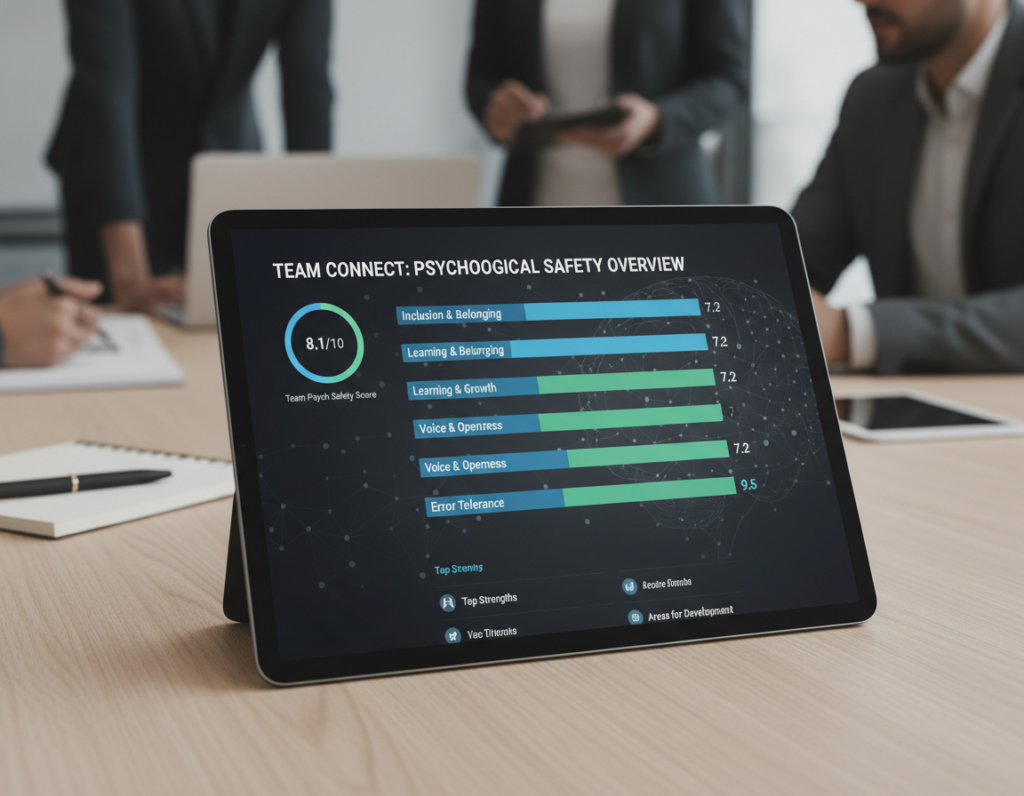
A psychological safety scale assessment tool helps you measure the current environment. This survey uses specific questions to see how employees feel about asking for help. Participants rank their agreement with statements on a scale from “strongly disagree” to “strongly agree.”
Averaging these scores allows you to identify strengths and areas needing improvement. You can then establish a baseline score between one and 10 to track your safety work progress. These ways of gathering data help align cultural changes with your specific business goals.
Using questions from the scale ensures that your efforts remain objective and measurable. Success in psychological safety work depends on continuous reassessment and honest feedback. A healthy culture thrives when data leads to meaningful action and long-term growth.
Best Practices for Fostering Psychological Safety
Fostering a sense of security within a group involves practical techniques that transform how people share their thoughts. This practice creates psychological safety by moving from top-down orders to open participation. These ways of working ensure that members feel comfortable taking risks while sharing new insights. When team members know their voices matter, the entire organization benefits from diverse perspectives.
Promote Conversation with Jazz Dialogues
Per Hugander developed the “jazz dialogue” framework for use at the Swedish bank SEB. This method helps the members team engage in a more structured yet flexible manner. The core rules focus on listening more and speaking less to allow for diverse voices. Participants build on the ideas of others and respond to emerging issues rather than pre-planned agendas.
This intentional structure ensures that every voice genuinely matters in the final outcome. It moves the conversation away from simple status updates toward meaningful co-creation. By focusing on what is emerging in the moment, innovation happens more naturally within the group.

Ask Open-Ended Questions to Encourage Input
Effective leaders use questions that require more than a simple “yes” or “no” answer. This approach prompts the members team to think critically and work through complex solutions together. It allows members to disagree constructively and articulate their thoughts with clarity. By asking better questions, you encourage a deep level of psychological safety within the workplace.
Open-ended inquiries invite people to dig deeper into their own logic. Instead of confirming a pre-set plan, these prompts invite genuine exploration. This collaborative thinking process helps the team identify potential hurdles before they become major roadblocks.
Show Value and Appreciation for All Ideas
When employees feel their contributions carry weight, they offer better solutions to common problems. You should show appreciation for all ideas, even if you do not implement every suggestion. This habit builds a culture where no contribution is seen as stupid or worthless. High-quality feedback also helps members refine their professional skills over time.
Validating ideas encourages a steady stream of creative input. Even when a suggestion is not feasible, thanking the person for their input reinforces positive behavior. This approach ensures that employees stay engaged and continue to provide helpful feedback on future projects.
Create a Culture of Accountability Not Blame
A healthy culture focuses on solving problems instead of finding someone to blame. You should encourage employees to own their actions and fix a mistake as soon as it happens. Communication regarding clear expectations helps everyone stay on the same page. Joyce Patrick-Bai emphasizes the importance of transparency in the workplace.
“I want people to come to me with a mistake or bad news. Even if you aren’t sure, something just doesn’t look right, bring it up.”
For example, Andi Paus models this accountability by acknowledging her own errors openly. Psychological safety grows when employees see that failures are learning opportunities. Finally, ensure that team members avoid dismissive body language like eye-rolling or talking over others. This respect allows the members team to focus on ideas that drive the project forward.
Maintaining Psychological Safety Over Time
To ensure long-term success, a team must treat its shared trust like a muscle that needs regular exercise. Dynamic Teaming suggests that psychological safety can atrophy if it is not maintained with intentional effort. You must focus on keeping your workplace environment healthy through constant reassessment.
Continually Reassess and Adjust Your Approach
Leaders should periodically revisit the safety scale to track cultural shifts and performance. This quantitative data helps you see if your current strategies are meeting business goals. Using these tools ensures that your psychological safety initiatives stay relevant over time.
Regularly solicit constructive feedback through one-on-one meetings with employees. Creating safe channels for honest feedback allows you to address emerging concerns quickly. This proactive approach keeps the team culture strong and adaptable.
Lead by Example and Own Your Mistakes
A leader sets the tone for the entire workplace by modeling vulnerability. When you publicly own your mistakes, you give others permission to do the same. This reinforces the idea that mistakes are actually learning opportunities rather than reasons for punishment.
Following a strong example helps build deep trust within the group. Andi Paus demonstrates this accountability in her daily management style. She believes in taking full responsibility for any errors she makes.
“If it’s my mistake, I acknowledge it. I made the error, I own it.”
When you lead by example, you show that learning is a priority. This shift in perspective helps employees feel secure when they face challenges or make their own mistakes.
Provide Clear Expectations and Transparency
Transparency is essential for maintaining a sense of safety. Leaders must provide clear goals and explain the reasoning behind strategic choices. This clarity can help members align their skills and contributions effectively with the company’s mission.
Encourage Time Off and Work-Life Balance
Sustainable safety requires leaders to prioritize rest and recovery. Joyce Patrick-Bai uses a visible time-off calendar to make leave requests feel normal and nonconfrontational. This simple way of managing schedules reduces the stress often associated with asking for time away.
Andi Paus also monitors time-off banks to encourage those who haven’t taken a break. She notes that even a long weekend can refresh a person’s attitude and work ethic. For high performers, Patrick-Bai suggests creative breaks, like taking every Friday off for a month, to ensure they rest without feeling overwhelmed.
Conclusion
Building a psychologically safe workplace is a long-term journey that demands significant time, effort, and real vulnerability from leadership. Courageous leaders who prioritize psychological safety can truly unleash their team’s full potential. By cultivating a culture of trust, you encourage teams to share ideas without fear of judgment.
Consistent safety work ensures that mistakes are seen as growth opportunities rather than failures. In a psychologically safe environment, every employee feels valued within the organization. Promoting psychological safety remains critical for job satisfaction and long-term retention.
To find effective solutions, organizations must foster open communication and transparency. Many things influence success, but the safety of your workplace determines if people can do their best work. You must assess your current safety levels and take active steps to improve.
Building a psychologically safe environment is not about avoiding discomfort. It is about creating safety where interpersonal risks feel acceptable. High levels of trust and psychological safety allow team members to tackle challenging problems together.
Many things require your attention, but few are as vital as the safety of your team. Dedicating time to specific safety work helps teams thrive. A psychologically safe culture leads to better results for the whole organization.
When safety is a priority, every employee feels empowered. Implementing safety work strategies ensures that safety remains a core value for everyone involved.
Commit to a psychologically safe and healthy workplace. Prioritize psychological safety starting today to build a more resilient and innovative future.